 RV Solar Installation
Learn
DC-DC Alternator Charging
Explore how drive time can help recharge your house batteries. Plan charger controls, current limits and engine-off behavior around the actual vehicle and battery bank.
Start here
Use these demonstrations alongside the manuals for your exact equipment and a plan suited to your RV.
Alternator & DC-DC charging
Compare two DC-DC options, then follow specific installation examples for Victron Orion XS and REDARC Alpha100 R chargers.
EXPLORIST.life
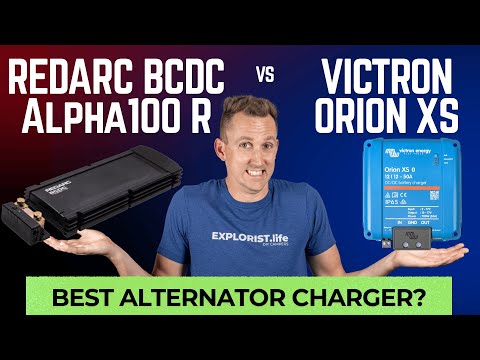
Best DC-DC Charger for Alternator Charging | Victron vs REDARC Compared
Compares the Orion XS and REDARC Alpha100 R by output, physical size, system communication, solar integration, and installation complexity.
Victron Orion XS versus REDARC Alpha100 R. The creator is a retailer for both brands.
Watch on YouTube
EXPLORIST.life
Victron Orion XS DC DC Charger Installation/Upgrade Tutorial
Shows a Transit camper-van upgrade from an Orion 12/12 30A charger to an Orion XS 12/12 50A, including connections, programming, and an engine-running check.
Transit camper-van retrofit from an Orion 12/12 30A to an Orion XS 12/12 50A.
Watch on YouTube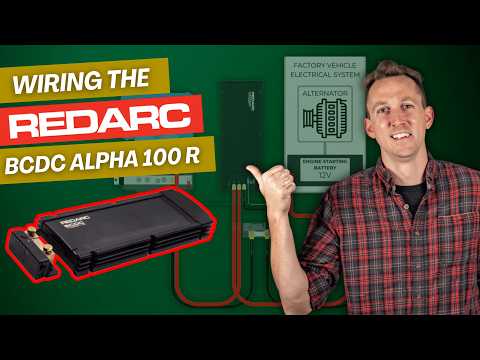
EXPLORIST.life
How to Wire a REDARC BCDC Alpha 100 R (Step-by-Step Install Guide)
Demonstrates Alpha100 R wiring with the creator's kit, covering cable terminations, a Lynx Distributor connection, starting-battery wiring, and data leads.
REDARC BCDC Alpha100 R installation using an EXPLORIST.life kit and a Victron Lynx Distributor.
Watch on YouTubeTerms to know
Ah (amp-hour)
Alternator
AWG
BMS
Breaker
Busbar
Crimp
DC-DC charger
Derating
Disconnect switch
Fuse
Isolator
Bring your equipment list, travel plans, and questions to an RV power specialist. Compare the proposed work, component choices, and support before booking.